

If you sell goods or services in British Columbia, GST is part of running the business. The rules are federal, the return is filed with the Canada Revenue Agency (CRA), and the jargon (“GST/HST”) can make a straightforward process feel harder than it is.
This overview covers who needs to register, how often you file, how input tax credits work, and common mistakes. It is general guidance — always check your own reporting period and due dates in your CRA account.
First: GST in BC, not HST
British Columbia is not an HST province. On most taxable sales you charge the 5% federal GST. Provincial sales tax (PST) is separate and administered by the Province of BC, not the CRA. When CRA pages say “GST/HST,” they mean the federal goods and services tax system. Your BC federal return is still a GST/HST return in CRA’s systems.
Do you need to register?
You generally must register for GST/HST if you make taxable supplies in Canada and you are not a small supplier.
For most businesses, you are a small supplier if your worldwide taxable revenues (including associates) are $30,000 or less in a single calendar quarter and over the previous four consecutive calendar quarters. Go over that threshold and you must register and start charging GST. You can also register voluntarily below the threshold if you want to claim input tax credits on your purchases.
Once registered, you file a return for every reporting period — even a nil return with no sales.
How often do you file?
The CRA assigns a default reporting period based on your annual taxable supplies from the preceding fiscal year:
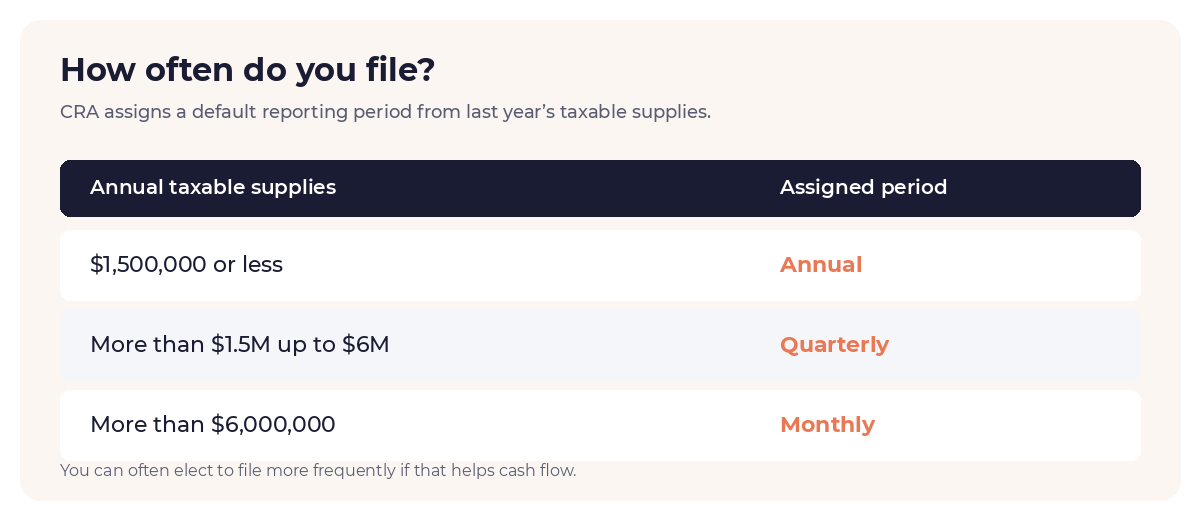
$1,500,000 or less
Assigned: Annual
Over $1.5M up to $6M
Assigned: Quarterly
More than $6,000,000
Assigned: Monthly
Charities are generally assigned annual filing. You can often elect to file more frequently than assigned (for example, quarterly instead of annually) if that helps cash flow.
When are returns and payments due?
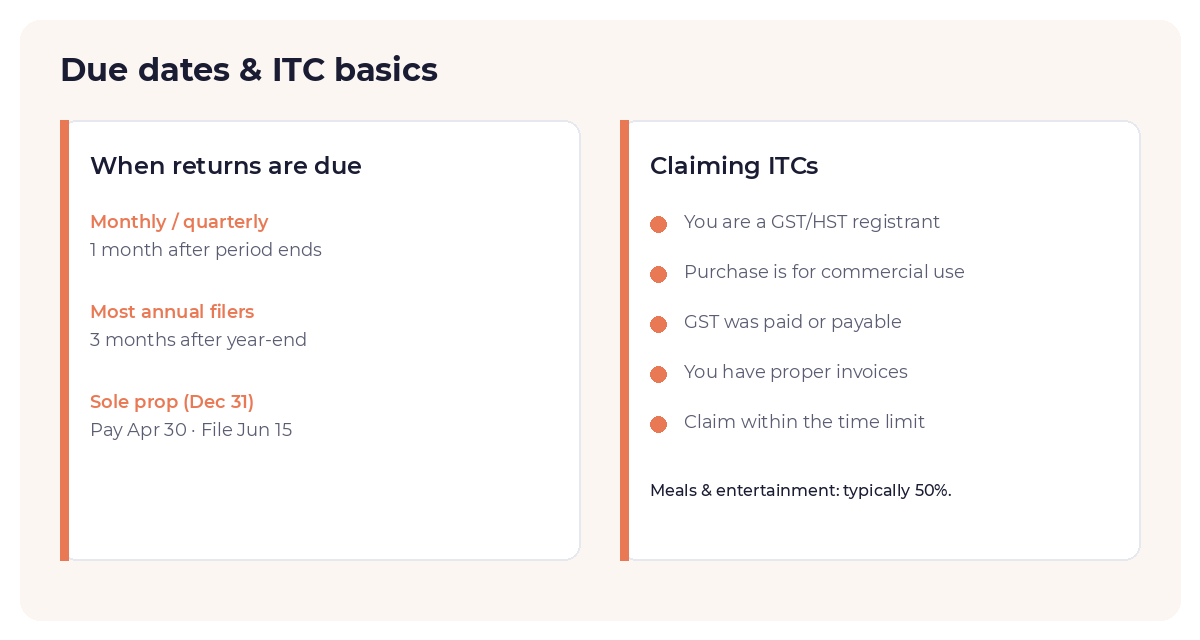
- Monthly and quarterly: return and payment due one month after the period ends (e.g. quarter ending March 31 → due April 30).
- Most annual filers: return and final payment due three months after fiscal year-end (December 31 year-end corporation → typically March 31).
- Sole-proprietor exception: individual, December 31 year-end, with business income that year → pay by April 30, file by June 15.
Weekends and CRA-recognized holidays move the due date to the next business day. For reporting periods beginning in 2024 or later, most registrants must file electronically (charities and selected listed financial institutions are the main exceptions).
Instalments: annual filers whose net tax for a fiscal year is $3,000 or more generally make quarterly instalments the following year, credited against the annual return.
Input tax credits (ITCs)
ITCs are how you recover the GST you pay on business purchases. In broad terms, you can claim an ITC when:
- ✓ You are a GST/HST registrant
- ✓ The purchase is for use in your commercial activities
- ✓ GST was paid or payable on the purchase
- ✓ You have proper supporting documents before you claim
- ✓ You claim within the time limit (generally within four years for most registrants)
Meals and entertainment are typically limited to 50%. Personal expenses and most recreation or dining club memberships do not qualify. Good bookkeeping makes ITCs easier: coded expenses, stored invoices and a reconciled GST account.
Common mistakes
Keep GST simple
GST filing is mostly rhythm: keep the books current, save your invoices, know your period and file on time. If annual filing leaves a stressful spring every year, switching to quarterly can smooth cash flow and catch errors earlier.
Questions?
Coast Mountain prepares T1 personal tax returns and GST returns for business owners — if you’d like help once your books are in shape, contact us.
General guidance only. Confirm your own dates and obligations in your CRA account.